Daily 15 - Mar 18
Class Performance
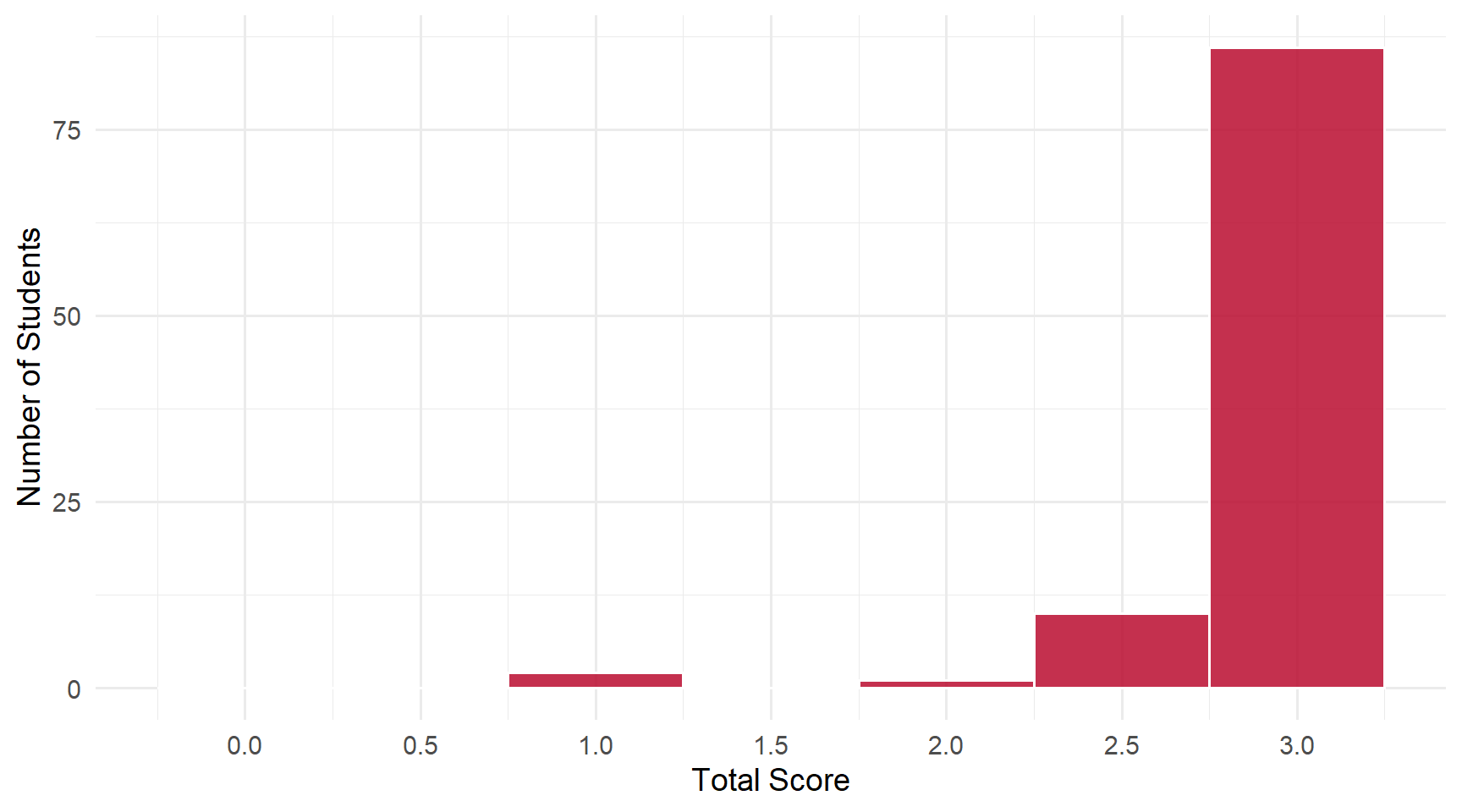
Students: 99 | Mean: 2.90 | Median: 3 | SD: 0.33
Scores ranged from 1 to 3 out of 3 points.
Score Distribution
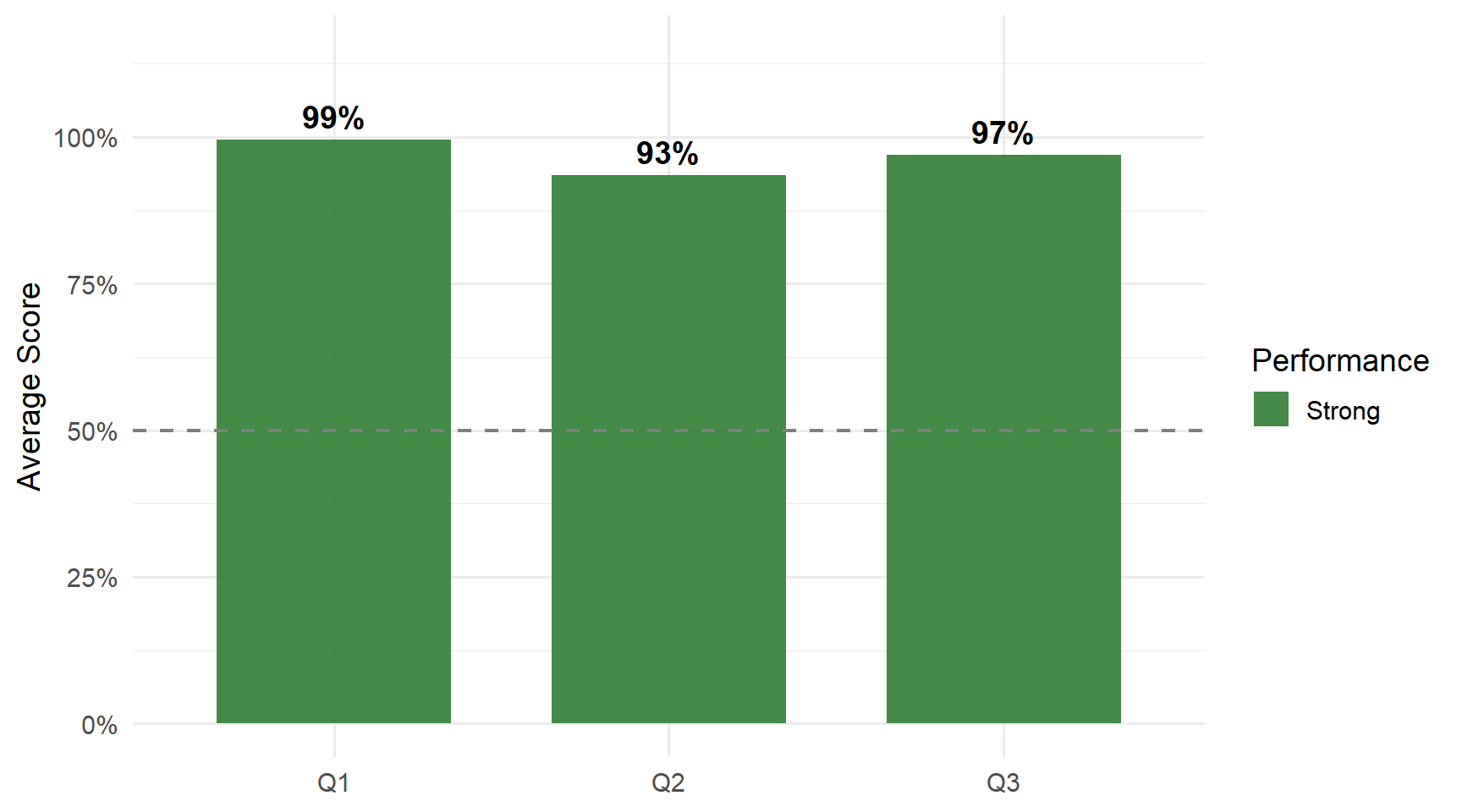
Performance by Question
Questions
Q1: Omitted Variable Bias Condition
Correct Answer
Beta-hat_1 would be biased unless beta_2 = 0 or x₁ and x₂ are uncorrelated (independent, unrelated).
Common Errors
- Very few errors — Nearly all students correctly identified both conditions.
- Acceptable synonyms — “Independent,” “unrelated,” and “uncorrelated” all received full credit.
Q2: Omitting Experience from Education Regression
Correct Answer
Bias is downward. Experience is negatively correlated with education and positively correlated with log wages.
Common Errors
- Swapping correlation signs — Writing “positively, negatively” instead of “negatively, positively.”
- Only stating direction — Writing “down” without the correlations earns partial credit.
- Writing “up” — The bias is downward: beta_exper(+) × delta_exper_educ(-) = negative.
Q3: Standard Errors to Always Report
Correct Answer
Robust standard errors.
Common Errors
- Writing “consistent” — Consistency is a property of estimators, not the type of standard errors.
- Outstanding performance — The vast majority correctly answered “robust.”
Key Takeaways
Strengths: Exceptional performance | OVB conditions well understood | Robust SE concept mastered.
Review:
- OVB formula — beta_exper(+) × delta_exper_educ(-) = negative bias on educ coefficient
- Correlation signs matter — Experience is negatively correlated with education, positively with wages
- Always report robust SEs — Valid whether or not heteroskedasticity is present